
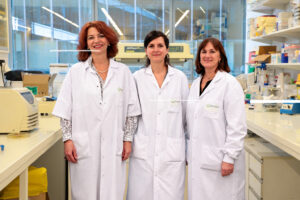
 The DYNAMO-GB project, led by the RADOPT team, has been awarded €339,984 in funding through the INSERM MCMP call for proposals. The project aims to investigate how the tumor microenvironment contributes to glioblastoma resistance to Tumor Treating Fields (TTFields) in order to support the development of more personalized treatment strategies.
The RADOPT team, led by Prof. Elizabeth Cohen-Jonathan Moyal, has been awarded funding through the “Functional Exploration of the Tumor Microenvironment in Poor-Prognosis Cancers (MCMP)” call for proposals, part of the French Decade Against Cancer Strategy and managed by Inserm. The 339 984 € grant will support the DYNAMO-GB research project, which aims to improve our understanding of the mechanisms underlying glioblastoma resistance to Tumor Treating Fields (TTFields) and ultimately contribute to the development of more personalized therapeutic strategies.
Glioblastoma is the most common and aggressive primary brain tumor in adults. Despite advances in treatment, patient prognosis remains poor, with a median overall survival of 21 months since the addition of TTFields to the first-line therapeutic arsenal. TTFields, a therapy based on the application of low-intensity alternating electric fields, represent the most significant therapeutic advance in glioblastoma over the past two decades. Although TTFields improve patient survival, treatment responses remain heterogeneous, and resistance almost invariably develops.
In this context, DYNAMO-GB focuses on the tumor microenvironment, a complex and dynamic ecosystem that plays a critical role in disease progression and therapeutic response. The project is based on the hypothesis that TTFields induce adaptive changes within the tumor microenvironment, thereby promoting the emergence of resistance mechanisms.
To decipher these mechanisms, DYNAMO-GB will monitor and study the evolution of the tumor microenvironment throughout TTFields treatment, from diagnosis to recurrence The project will combine state-of-the-art multidisciplinary approaches, including spatial transcriptomics and spatial proteomics, circulating biomarker profiling from plasma, multiparametric MRI, bioinformatics, and artificial intelligence (AI), together with functional validation using patient-derived glioblastoma organoids. This integrated strategy aims to identify biological and imaging signatures predictive of treatment response and to uncover novel therapeutic targets.
Led and coordinated by the RADOPT team (Dr. Valérie Gouazé-Andersson, Dr. Pauline Deshors, Pr Elizabeth Cohen-Jonathan Moyal, IUCT-Oncopole), DYNAMO-GB brings together complementary expertise in tumor biology, medical imaging, bioinformatics, and AI. AI approaches will be carried out within the RADOPT team with Ahmad Berjaoui, an AI expert and RADOPT associate researcher from IRT Saint Exupéry. The international consortium also includes the TONIC team at Toulouse University Hospital (CHU Toulouse-Purpan), with Dr. Margaux Roques contributing expertise in neuropathology and imaging analyses, as well as the CNRS IMmune HEAlth International Laboratory (Ribeirão Preto, Brazil), led by Prof. Tathiane Malta, whose team specializes in multi-omics data integration and computational approaches to cancer research.
This funding further strengthens the position of the RADOPT team in the development of integrated approaches at the interface of tumor biology, medical imaging, and artificial intelligence, addressing key challenges in precision medicine for neuro-oncology.