

Oncoproteins and protein-protein interactions involved in therapeutic resistance
Nicolas Béry
In response to anti-cancer therapies, signalling pathways can be activated and induce cancer cell resistance to these treatments. These pathways are generally regulated by oncoproteins and protein-protein interactions. Our project consists in determining the molecular mechanisms controlling resistance in pancreatic tumours, by identifying and inhibiting targets such as (onco)proteins and/or protein-protein interactions. To this end, we are developing innovative methods and tools based on intracellular antibody technology. These antibodies are derived from the variable domain of camelid single heavy chain immunoglobulins and are called “nanobodies”. They specifically bind to their target and can thus block their function(s) in cells. It is also possible to functionalise these antibodies with effector molecules. For example, intracellular antibody degraders are fused to an E3 ubiquitin ligase to induce the specific degradation of their target. Using these technologies, we inhibit mediators of signalling pathways “à la carte” to define their role in pancreatic cancer cell resistance.
Illustration :
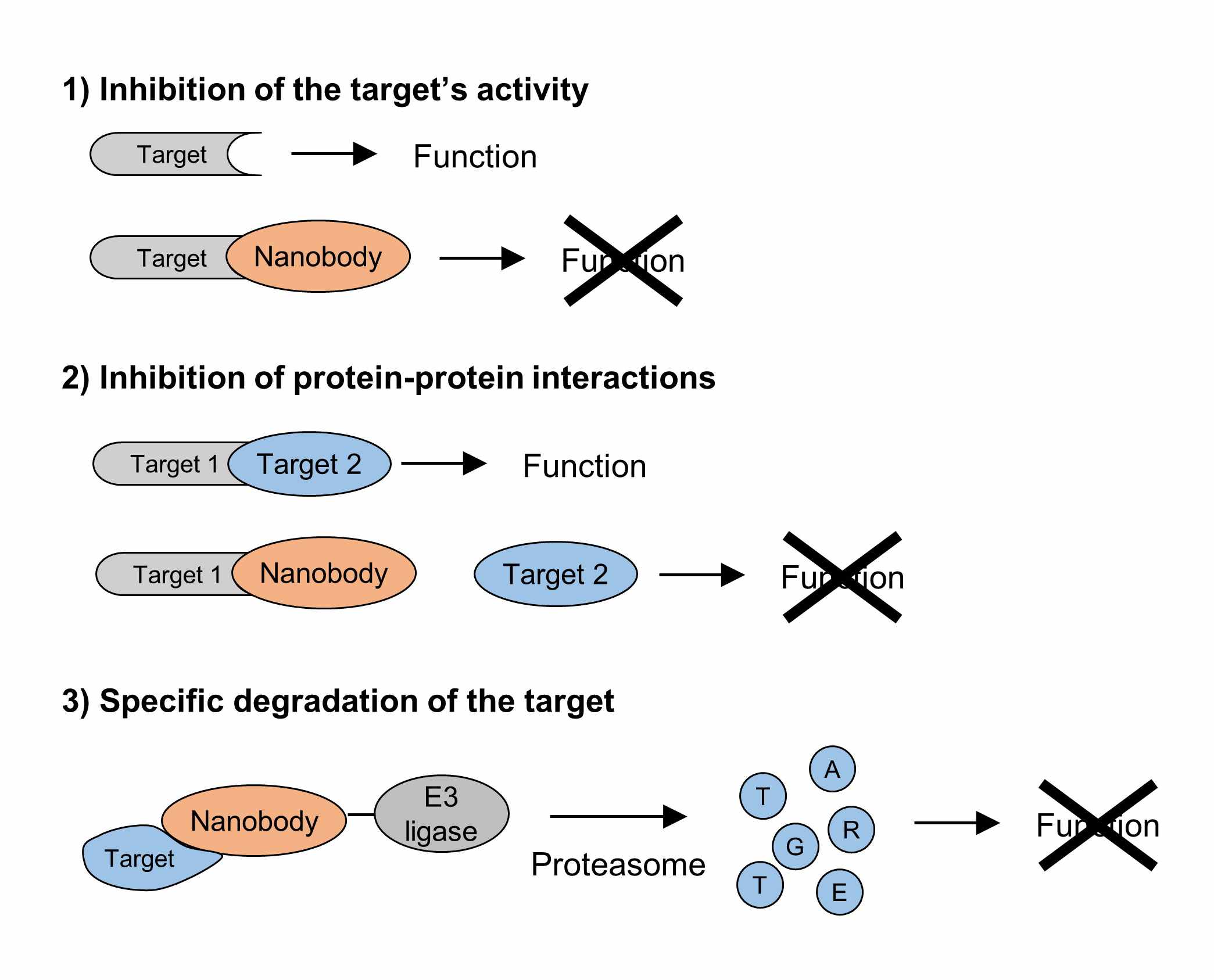
Different uses of intracellular antibodies.