

- Cet évènement est passé.
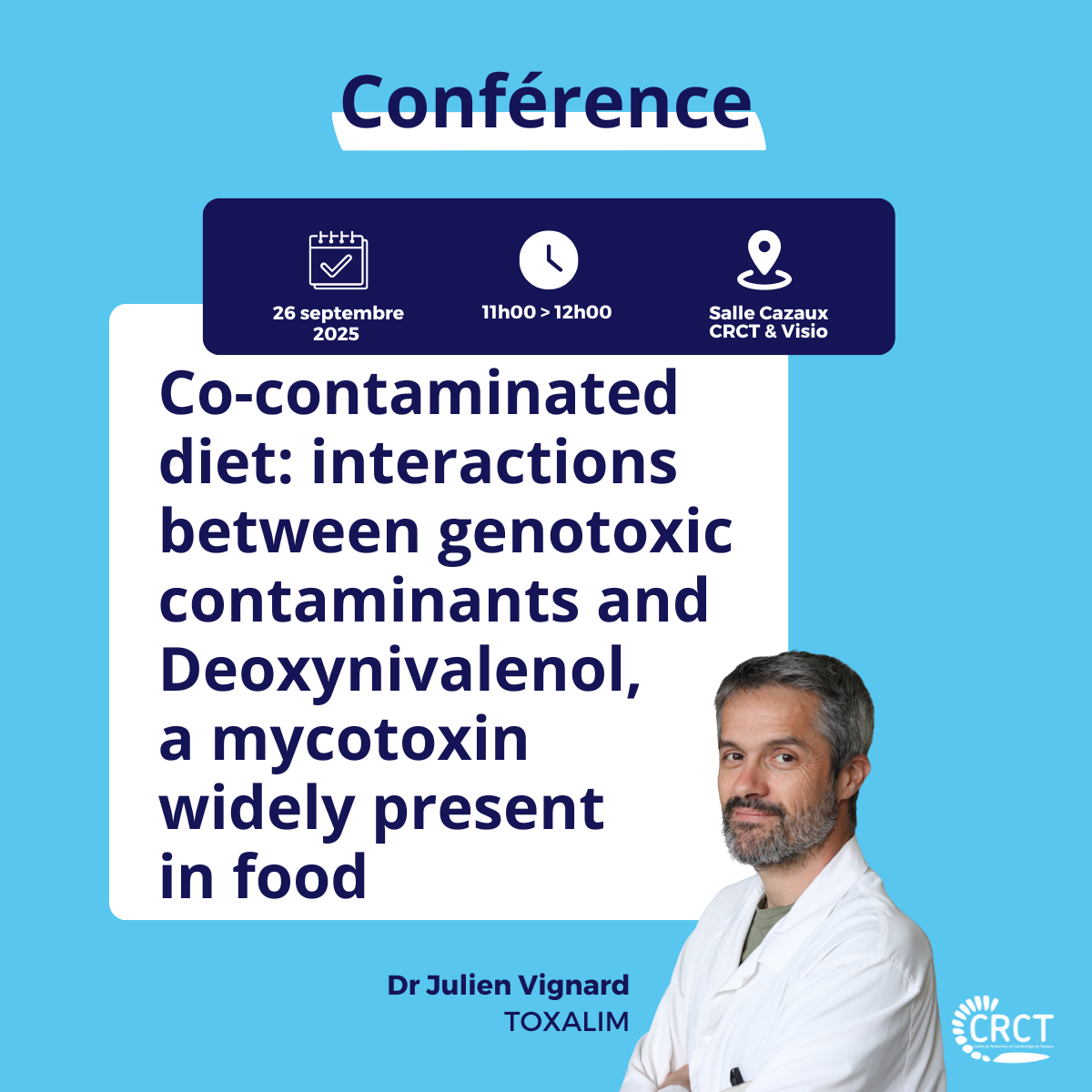
Co-contaminated diet: interactions between genotoxic contaminants and Deoxynivalenol, a mycotoxin widely present in food – Dr Julien Vignard
Abstract :
Food safety represents a global major issue. We are exposed to numerous potentially toxic substances, the combined effects of which can pose a health risk that is difficult to predict. The Deoxynivalenol (DON) mycotoxin is among the most widespread food contaminants and represents a serious threat to human and animal health. Due to DON high prevalence in staple diet, understanding its toxic interactions with other food contaminants is essential.
While DON is not considered as carcinogenic by itself, recent epidemiological data reveal that DON exposure is associated with colorectal and liver cancers. To better understand this unanticipated adverse effect, further research investigating the underlying mechanisms is necessary. It is well established that DON inhibits ribosomal functions, with harmful consequences on protein translation, cellular stress response, and mitochondria dysfunctions resulting in oxidative stress. We have previously shown that DON ribotoxicity exacerbates the DNA damage induced by different genotoxic compounds with unrelated modes of action, including a bacterial genotoxin associated with colorectal cancer. However, the consequences of DON co-exposure with other genotoxic environmental stressors still need to be assessed. The genotoxic interactions between DON and potential carcinogenic substances present in food will be presented. The molecular bases of DNA damage exacerbation by DON are currently under investigation, paving the way to better characterize the consequences of DON exposure on genetic stability.
Pour suivre la conférence à distance, cliquez ici.